

1st Edition
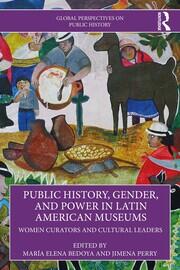
Public History, Gender, and Power in Latin American Museums Women Curators and Cultural Leaders
Prologue: Amada Carolina Pérez. Introduction: María Elena Bedoya and Jimena Perry. Part 1: These are our Voices: Dialogues with Women Community Curators and Leaders. Introduction. 1: Elvira Espejo, Bolivia, Museums, Mutual Nurturing, and Indigenous Languages: The National Museum of Ethnography and Folklore. 2: Marcele Pereira, Brasil, A Museologist's Journey Through Education and Social Justice: Between Memories and Struggles. 3: Gloria Elcy Ramírez, Colombia, A longlife devotion to Community Service and Memory: Lessons from the Hall of Never Again. 4: Juana Paillalef, Chile, Mapuche Women, Museums, and Intercultural Education: Ruka Kimün Taiñ Volil, or "The House That Remembers Our Roots". 5: Luzmila Zambrano, Ecuador, "Honoring The memories of our grandfathers and grandmothers": The Museo Viviente Otavalango, Ecuador Experience. 6: Raquel García, Guatemala, Women are generators of life: The Ixkik' Museum of Mayan Costume. Part 2: Weaving Knowledge, Experiences, and Reflections. 7: Critical and Gendered Perspectives in Public History: Beyond the Exhibit in museums, by María Elena Bedoya and Jimena Perry. 8: Women Activate Heritage in Community: A Journey through the Work Experience of Maribel García (Argentina,) by Mariana Paganini. 9: Weaving Words Around the Guainía Community Museum, Colombia, by Magally Ortiz Pava and Carmen Pérez Maestro. 10: A Look at the Itinerant Museum of Memory and Identity of Montes de María, El Mochuelo: Women's Voices from Colombia, by Italia Samudio and Soraya Bayuelo. 11: Kneading Memory, Shaping History: Women, Handcrafts, and the Museum in the Community of La Pila (Ecuador), by Pamela Cevallos and Gema Quijije, Ecuador. Epilogue: Between Public Histories and Possible Futures: An Open Epilogue, by María Elena Bedoya and Jimena Perry. Bibliography.
Biography
María Elena Bedoya is an independent scholar and curator and an Honorary Research Associate at the University of Manchester, UK. Her research explores public history, visual culture, and critical museology in Latin America.
Jimena Perry is a Colombian public historian, anthropologist, and Professor at Iona University in New York. Her work explores memory, museums, and community-based heritage in Latin America. She manages the IFPH Explorers project, promoting global dialogues on decolonial, feminist, and participatory approaches to public history.
"It would be hard to overstate the importance of this collection of eleven essays examining museums and other places of public history through a gendered lens. Part one of Public History, Gender, and Power in Latin American Museums: Women Curators and Cultural Leaders gives space to little-heard indigenous and marginalized community voices sharing varied experiences of working both with and within museums. Part two offers more academic reflections on knowledge production, social activism, and the cultural politics of doing history work. Anyone interested in history, public history, museums, archives, tangible and intangible heritage, cultural representation, and cultural politics should read this book. Why? Because these voices, case studies, and research findings from across Latin America offer insights of global significance."
David Dean
Distinguished Research Professor in History & Professor Emeritus, Carleton University
co-editor, International Public History
President, Workers' History Museum
"This beautifully conceived, carefully structured and very well-written collection edited by Bedoya and Perry presents readers with an impassioned political plea for global audiences to learn about and acknowledge the significant contributions of women public historians and museum workers in Latin America. The collection creatively critiques the hegemonic historical practices of the Global North insisting on the need for local, Indigenous, Afro-descendant, migrant, community-based women and workers to have their voices heard in museums and civic spaces around the world. The authors challenge Western-centric, masculinist, colonial accounts of the past and museum practices, making clear the powerful political purpose of public history in the process and the need for all of us to stop, listen and think about the political consequences of the work we do and to try a good deal harder to make public history more inclusive."
Tanya Evans
Professor, School of Humanities
Centre for Applied History
Centre for Media History (CMH)
Macquarie UniversityPresident
International Federation for Public History, IFPH"Public History, Gender, and Power in Latin American Museums offers readers an international and engaging overview of the transformative potential of public history to challenge hegemonic narratives and support more representative and inclusive museum practices. Through a series of experienced testimonies and professional analyses, the book sheds light on current power relations in public history and is an indispensable resource for anyone working in the field."
Thomas Cauvin
Professor of Public HistoryPHACS (Public History as the New Citizen Science of the Past)
ATTRACT Grant Project funded by the Fond National de la Recherche (FNR)
Luxembourg Centre for Contemporary and Digital History (C2DH)
UNIVERSITY OF LUXEMBOURG
CAMPUS BELVAL